Oh Dear… It’s My Turn to Add to the Already Enormous Pile of Japan Travel Blogs
By now, we all know about Japan’s famous bullet trains, neon lights, countless Instagram spots, and lifechanging bowls of ramen. It’s also common knowledge that to enjoy all of the above, you’ll need a deep pocket and a very strong pair of elbows to deal with the crowds. All the blogs I read, basically all said the same.
So, I made it my (needless) goal to try and write something a little bit different. Of course, I soon discovered that it’s nearly impossible… everything my simple brain could conjure up, had been done! But, eventually I settled on haikus.
Seems appropriate, right?
The bad news is, poetry is firmly on the long list of things I suck at. In fact, I spent two painful hours trying to write one single funny haiku about our trip before admitting defeat. In the end, I caved and wrote a bunch of (very) un-funny ones in under an hour. that means you’ll want to buckle up, uncurl your toes, and prepare for something un-profound and mildly pretentious… Just know that writing haikus is not easy.
Some (more) Preamble
Just so we are aware of what the point of this blog actually is, you should know we spent just over two weeks just on Honshu island, travelling on a fairly tight budget. That meant using local public transport as much as possible, minimising bullet train use (even if it is brilliant), and sticking to ‘affordable’ rooms. Which for us, meant £50/night max, with three excruciating exceptions while we were in close proximity to Tokyo.
Here are my top tips for budget travellers:
1. Use local trains and buses wherever possible – avoid taxis.
2. Eat at small local restaurants and/or convenience stores. They’re cheap, tasty, and surprisingly fun.
3. Make use of night buses to cover long distances and dodge Shinkansen costs.
4. Prioritise your activities! If you try to do it all, your money will literally vanish. Thankfully, there’s a lot that’s free.
5. Plan as far in advance as possible. Last-minute hotels can be obscenely expensive..
With that said, let’s get straight into the haikus (plus some useful info, I promise).
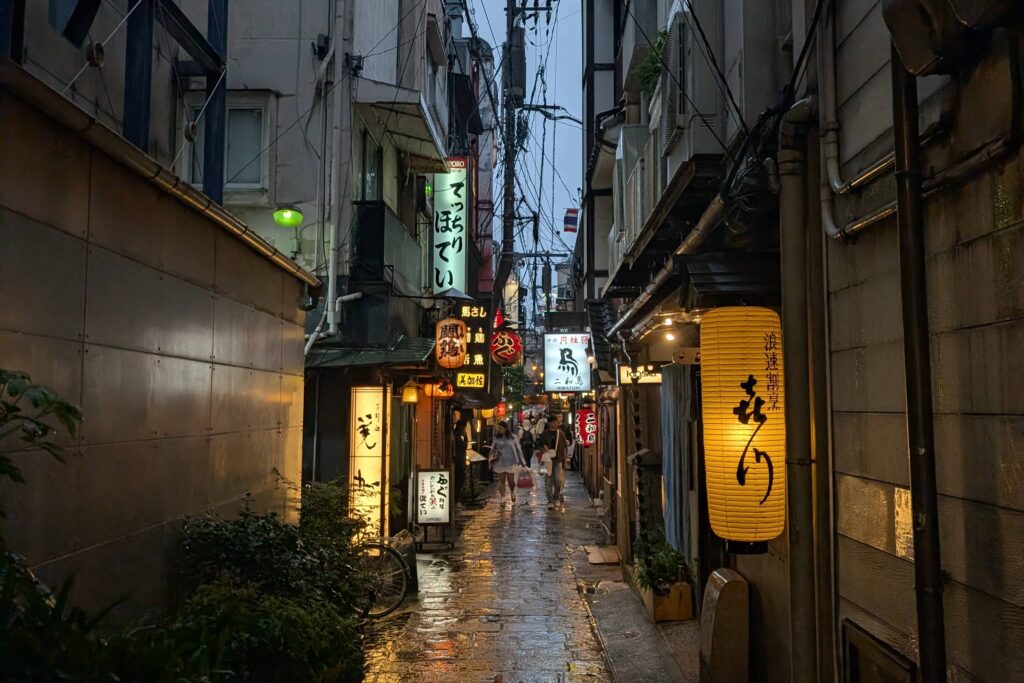
Osaka
Lantern light through rain
guiding aroma alleys,
castle walls await.
Yeah… once you’re done wincing at the Haiku, let’s talk Osaka. From Taiwan, we flew directly here, rather than Tokyo – the flights were slightly cheaper, plus we had tickets to the ‘World Expo 2025’, held in an astonishingly massive wooden Colosseum-ring-thing. We stayed a fair way out of the centre, but crucially within walking distance of a train station. I highly recommend doing the same, distance matters a bit less, because Japan’s infrastructure actually works!
Things We Did:
World Expo – An architectural marvel from the outside, but inside… the queues required ‘Alton Towers on a sunny day’ levels of commitment, and the content was underwhelming.
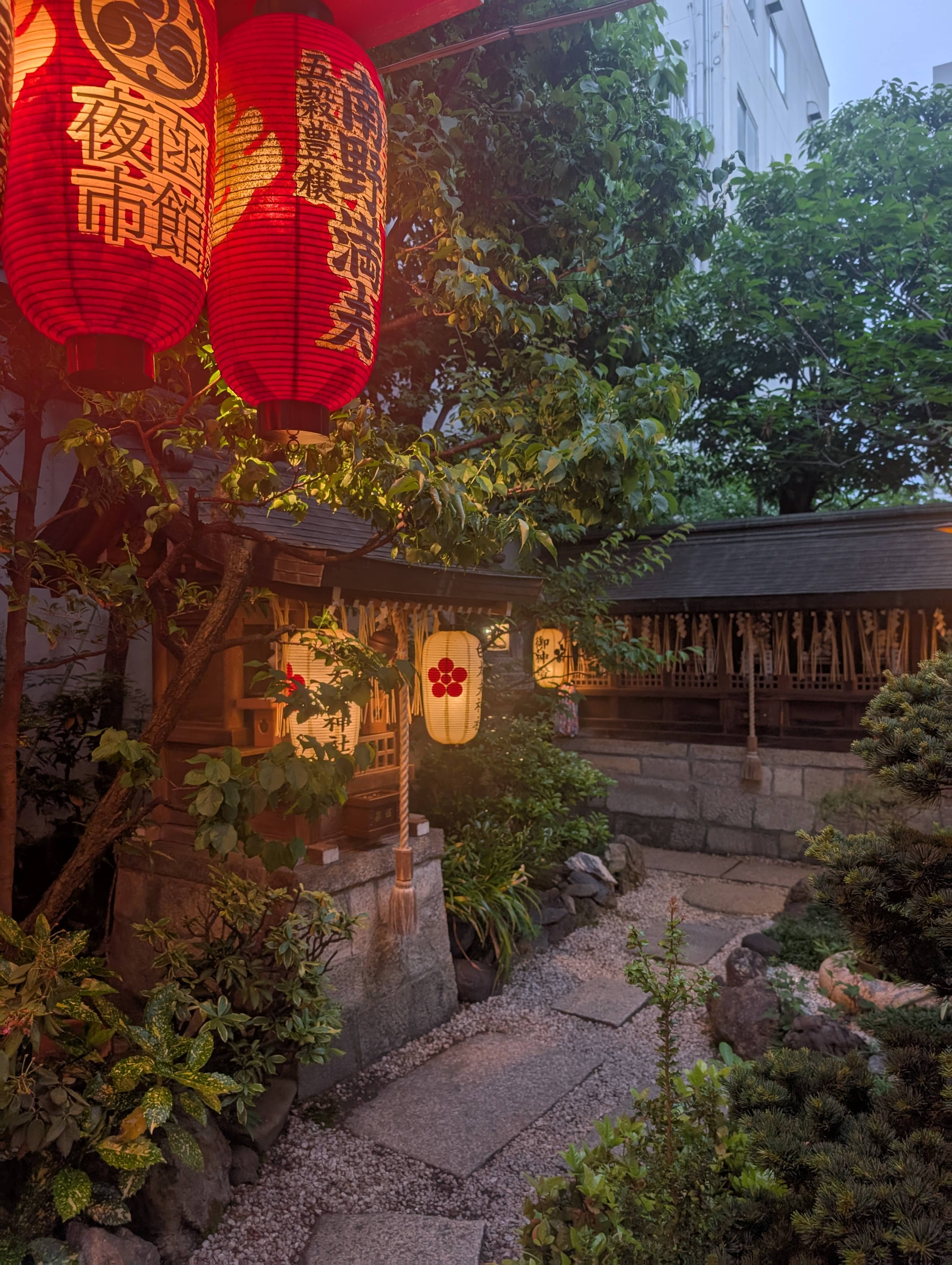
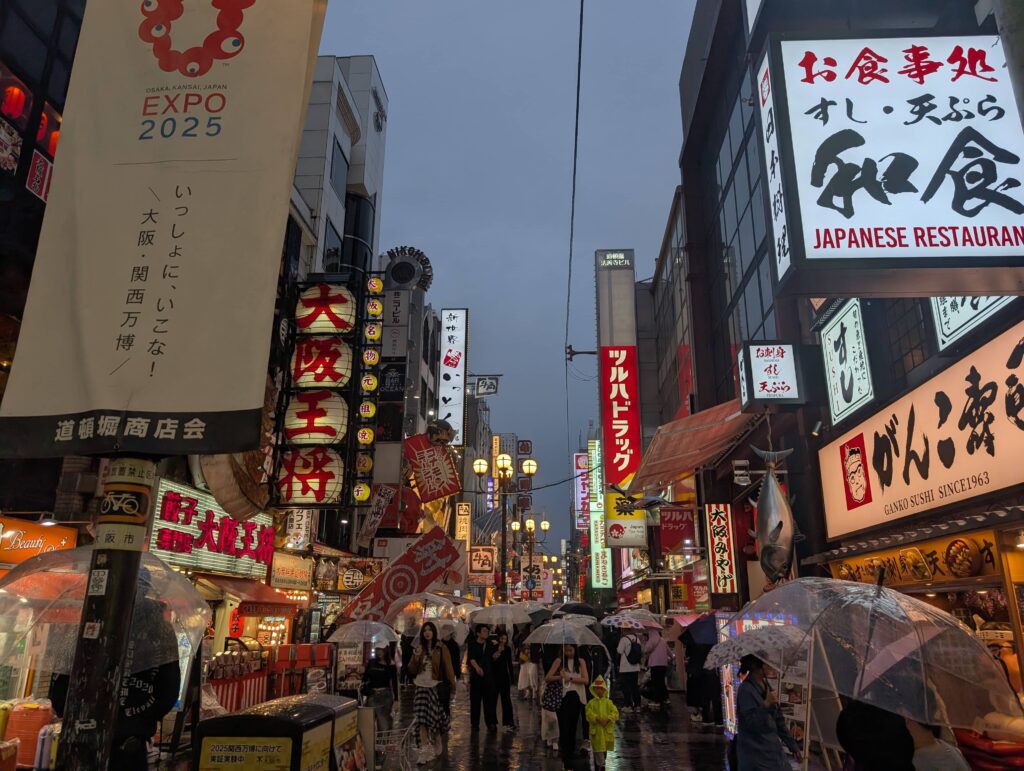
Dotonburi – Quintessential Japanese weirdness crammed into one neon-glow street. Think giant mechanical crabs waving from building facades, endless flashing signs, and restaurant touts who just won’t quit. We tried a few eateries, but they were expensive, served tiny portions, and slapped on an inexplicable mandatory table fee. Plus, a few even smelt… questionable. Honestly, the wondering around back alleys in the rain was much better – lanterns glowing, hidden shrines, and regular moments of Ghibli-Esque beauty.
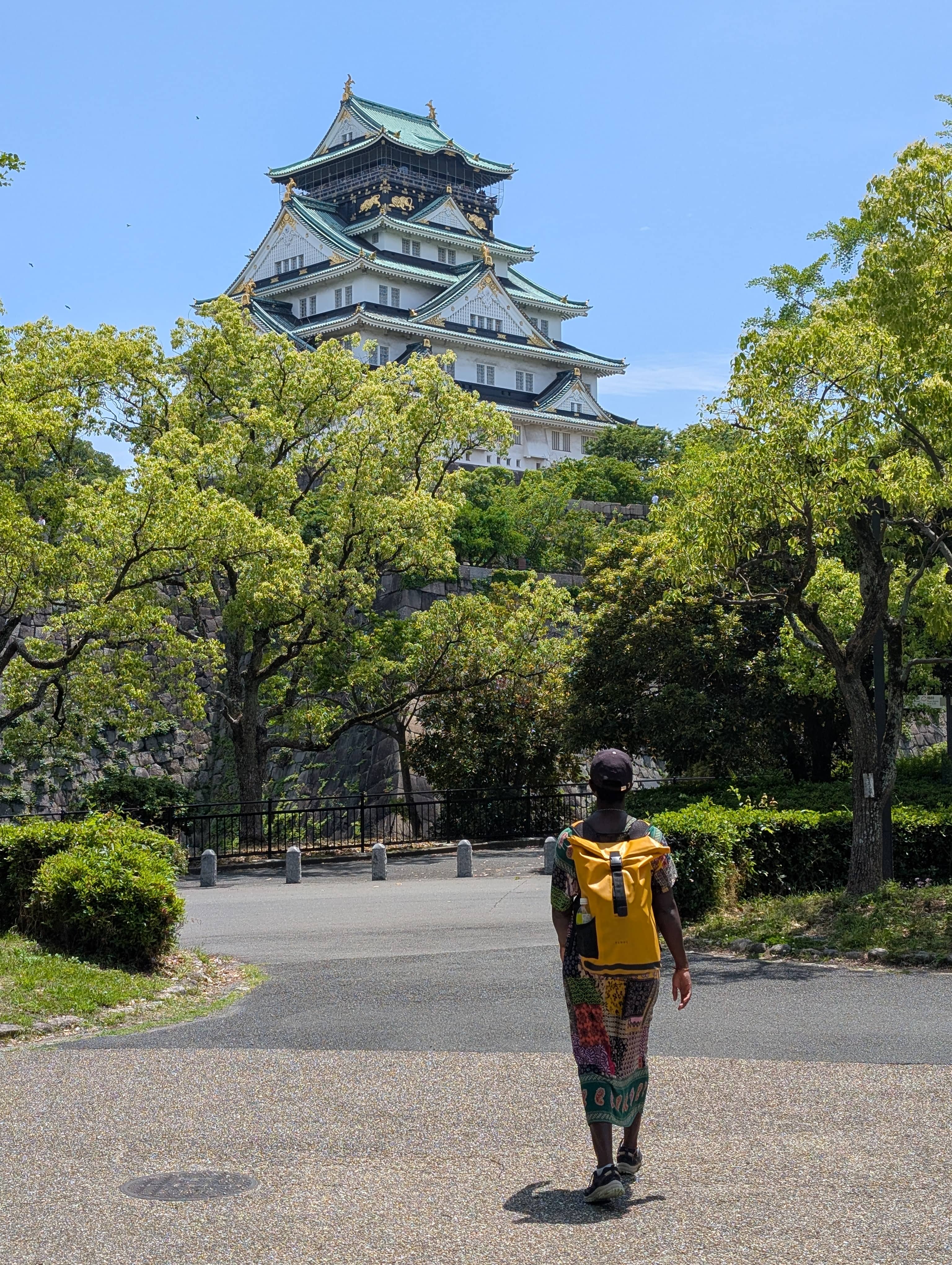
Osaka Castle – If you like castles, you’ll like this one. Fairly big, pretty, not painfully expensive, and surprisingly not overcrowded.
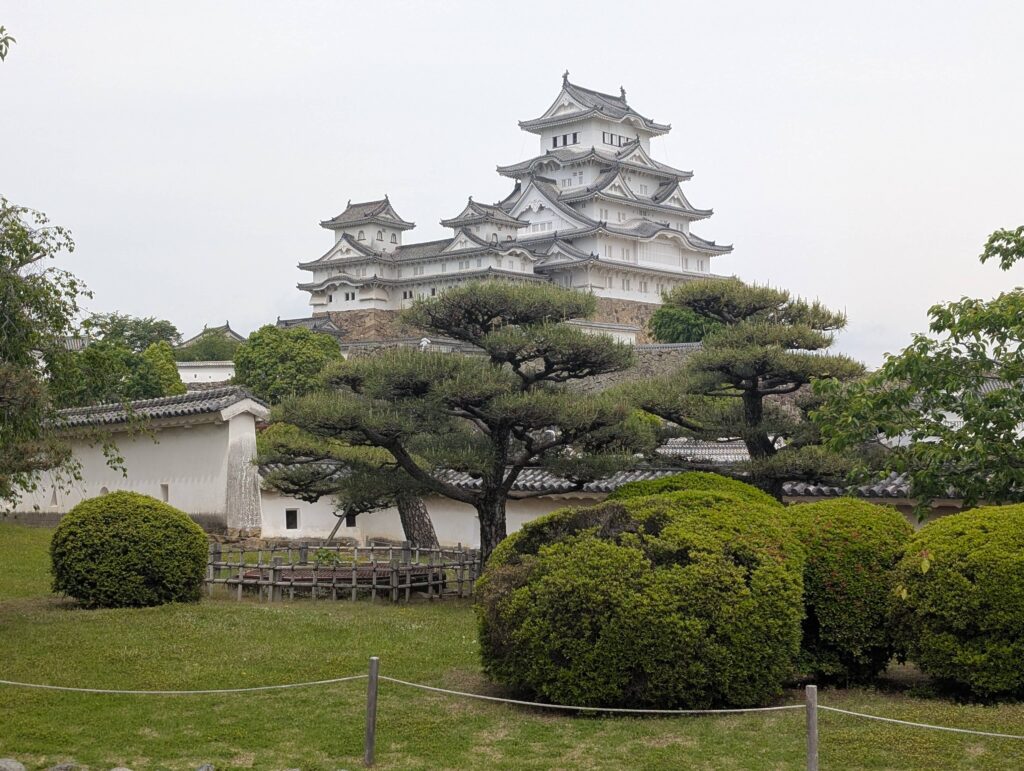
Himeji Castle (day trip) – On the way, we stopped in Kobe for an obligatory beef sample and a quick detour to some waterfalls. In all, it was very skippable unless you have a good amount of time to properly explore. From Kobe we splurged on a Shinkansen to save time getting to Himeji. It was totally worth it – it was the best castle we saw in Japan. Huge, spectacular, beautiful gardens and full of interesting history… the only downside was that it was absolutely rammed! The return by local train took just under two hours.
Kyoto
Temple awe stirs souls,
but crowds disrupt the silence.
River zen endures.
That Haiku makes me cringe too, a lot, but it’s actually a fair summary of Kyoto.
We hopped on a local train from Osaka, it’s cheap, quick (about an hour), and very straightforward. To stay within budget we had to pick a hotel a little out of the centre, but with Japan’s public transport that doesn’t really matter… although we did end up clocking nearly 30,000 a day!
Things We Did:
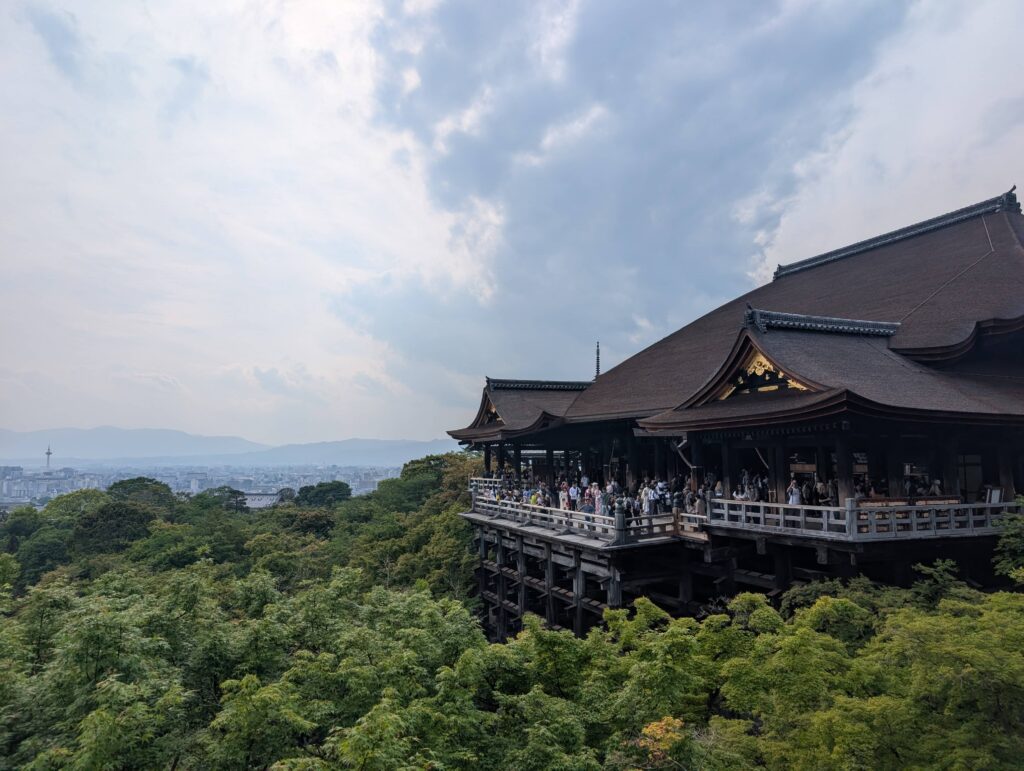
Temples (and similar things) – Kyoto is bursting with shrines, gardens, pagodas and castles – all stupidly pretty, but for the most part, suffocatingly busy! Kiyomizu-dera and Kinkaku-ji were easily the most crowded places we visited in all of Asia, and we weren’t even there in the cherry blossom or fall seasons! Which mean that, somehow, it actually gets even busier than we saw – frankly, a terrifying thought…
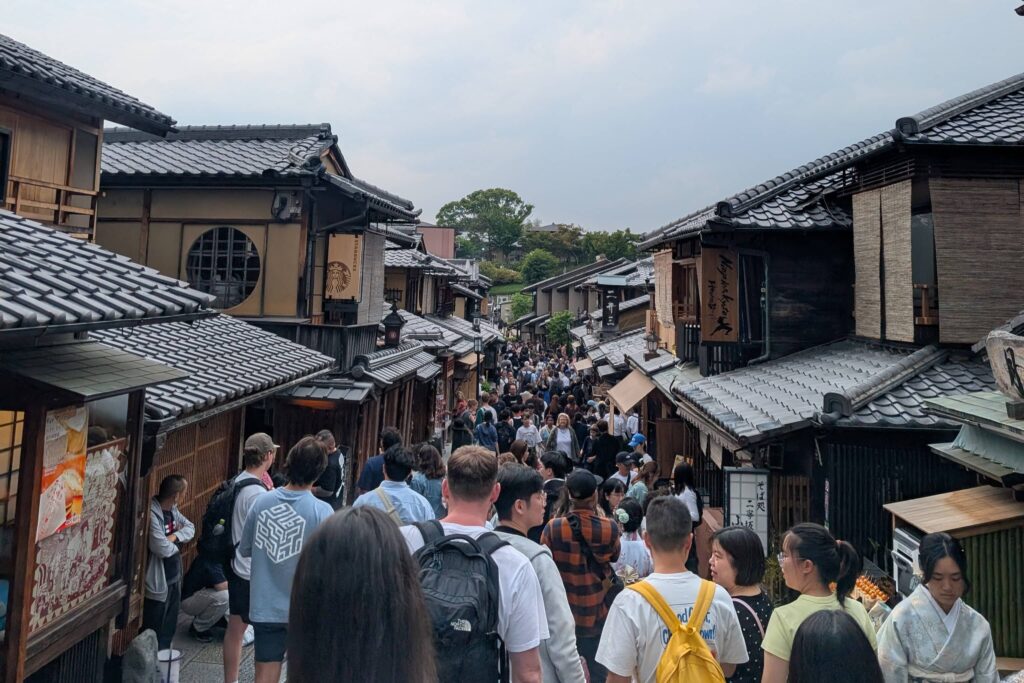
Exploring on foot – Make sure you pack comfortable shoes. Kyoto just beckons you to keep pounding the pavement, with side streets, historic quarters and bamboo groves that never stop being amazing to look at. One of our favourite finds was a tiny, ramshackle calligraphy shop run by the tiniest elderly lady you can imagine. The whole thing felt like another scene straight out of a Studio Ghibli film. Then, at some point it hit us that it’s not that Kyoto looks like Ghibli… it’s that Ghibli looks like Kyoto! Yes, I know, “no sh*t Sherlock!”
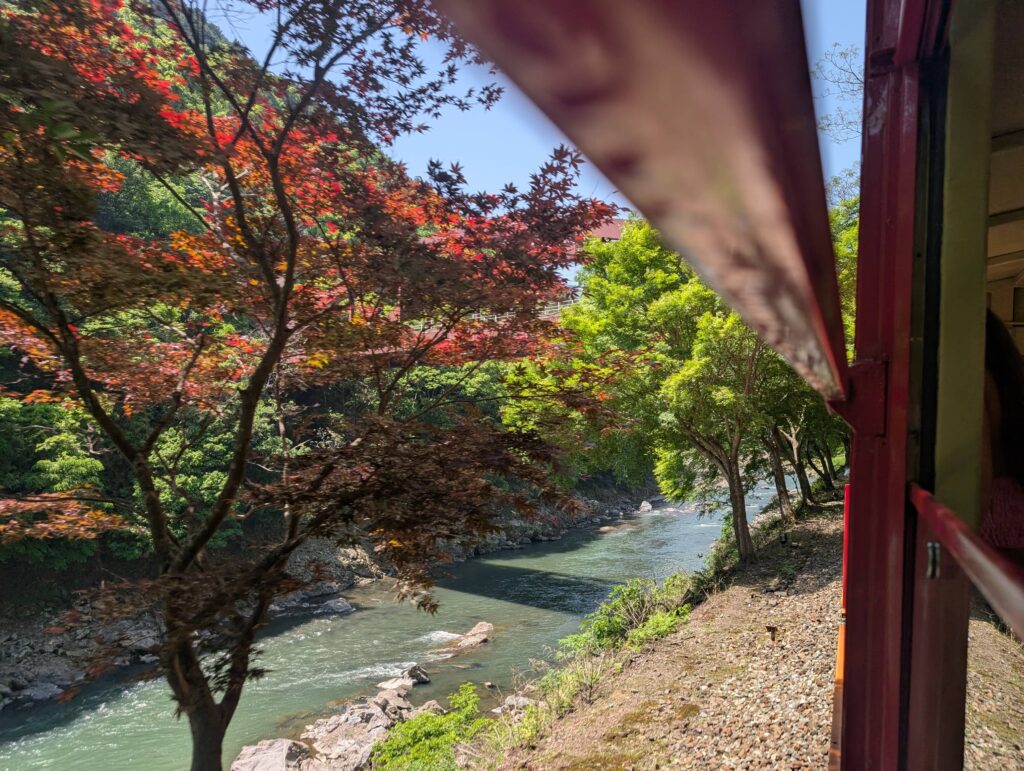
Sagano Romantic Train – I’ve no idea why it’s called that… I suppose it’s kinda romantic, but the vast majority of passengers were families of tourists. Still, the ride takes you through a beautiful river valley, ending in a fairly non-descript little town where you can grab a bento box and hop on a boat ride along the river.
Sit by the Kamo River – While the golden hour approaches, you can just sit on the peaceful river bank, sipping iced tea, counting carp and kingfishers, and watching the world go by. If you’re lucky, you may even see the odd snake or nutria weaving through the reeds. Plus, if you position yourself somewhere near Pontocho, you may even get to see a Geisha or two hosting a group of businessmen!
Hiroshima
History’s scars shown,
nature and people reclaim,
Torii stand the test.
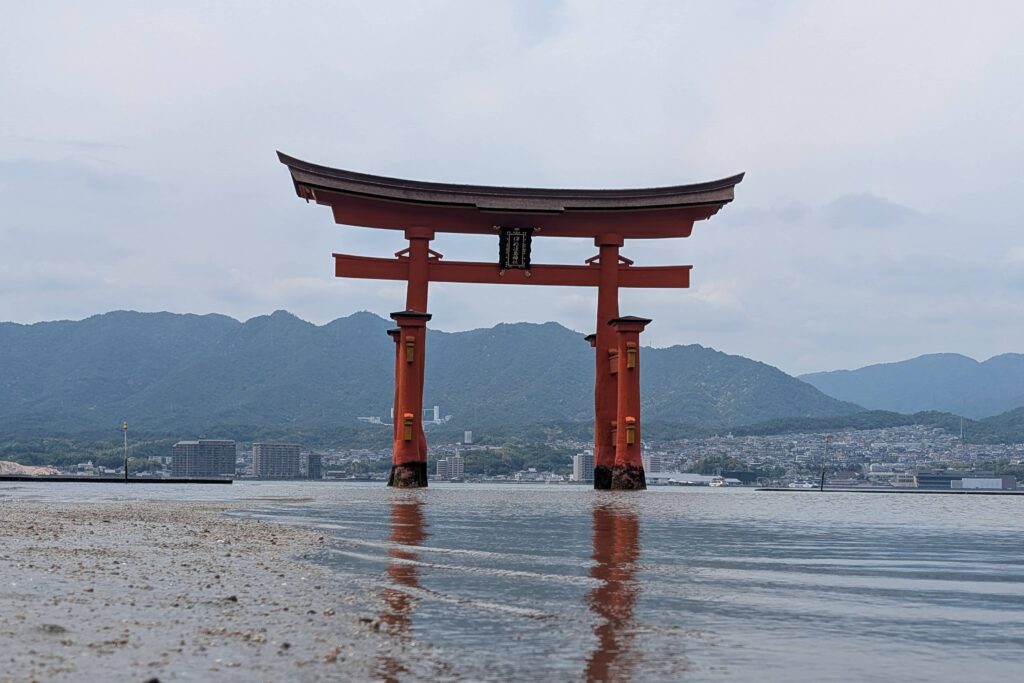
Probably the worst Haiku in this blog. Although, it’s also the one that makes me cringe the least… but, it just kinda sucks! By the way, if you’re wondering, ‘Torii’ are those stereotypical red wooden gateways you see all over Japan.
Getting to Hiroshima from Kyoto by bullet train only takes about four hours, but it comes at a pocket-ripping price. So, taking inspiration from our Southeast Asian travel, we went for the night bus instead. It was cheap, easy to book, and, of course, saved us the cost of a night in a hotel! The only small issue was that sleep was a no-no…
Unlike the Southeast Asian sleeper buses with smelly bunkbeds, or battered old semi-reclining chairs, this one was more a kin to a mega bus with weird ‘vanity hoods’ that folded down over your head – deeply uncomfortable!
Public Service Announcement: Ever heard of Melonbooks? Sounds innocent enough, right? That’s what we thought… until we walked in without fully realising what we were getting ourselves into. Amusingly, we quickly found ourselves in a jaw-dropping cornucopia of hentai and other fetishist merchandise. Turns out, Melonbooks is some kind of anime store, but one that dedicates a significant portion of its floor space to 18+ material – be warned!
Things We Did:
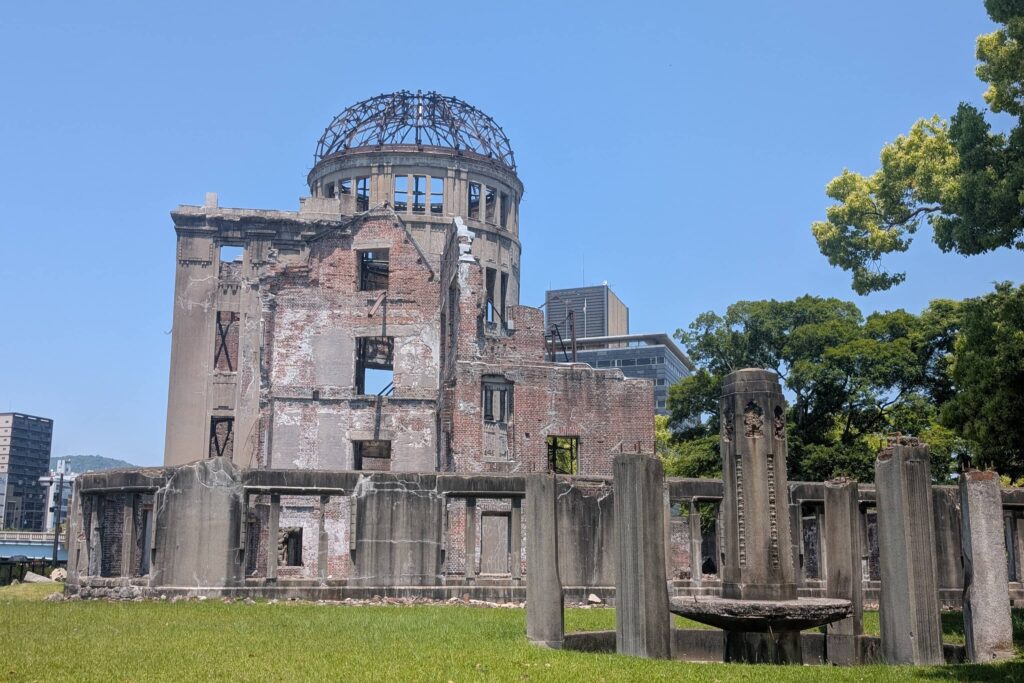
Peace Memorial Museum – We stayed close to the Peace Park, which meant we could dip in and out of the museum whenever it all got a bit too heavy. As you’d expect, it’s harrowing, but it’s also incredibly fascinating and absolutely worth the visit. Just a short walk away is the Atomic Bomb Dome, along with several other monuments and memorials that give the area a strange kind of calmness.
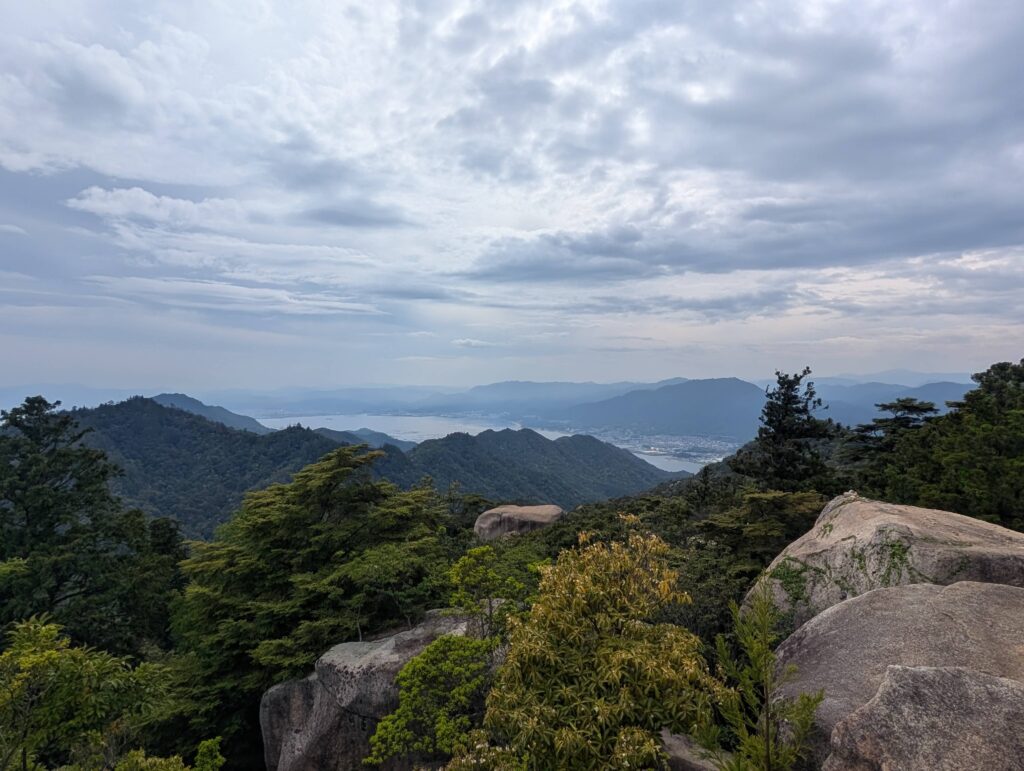
Miyajima Island – Absolutely brilliant. Yes, it was busy (this is Japan, after all), but completely worth the trip. We only planned for a day visit, but in hindsight could have stayed longer. Between the free-roaming deer, the temples, the seaside town, and the dangerously drinkable local beer, you could easily spend a full day without even leaving the waterfront. You’d want another for the cable car ride and hiking trails that cut through the ludicrously beautiful mountains and forests. The views from the top are spectacular – just be sure to give yourself enough time to get down again if you’re relying on the last cable car back.
Tokyo/Yokohama
Tokyo city crush,
Shrines enshrined in brick and steel,
hush found in night glow.
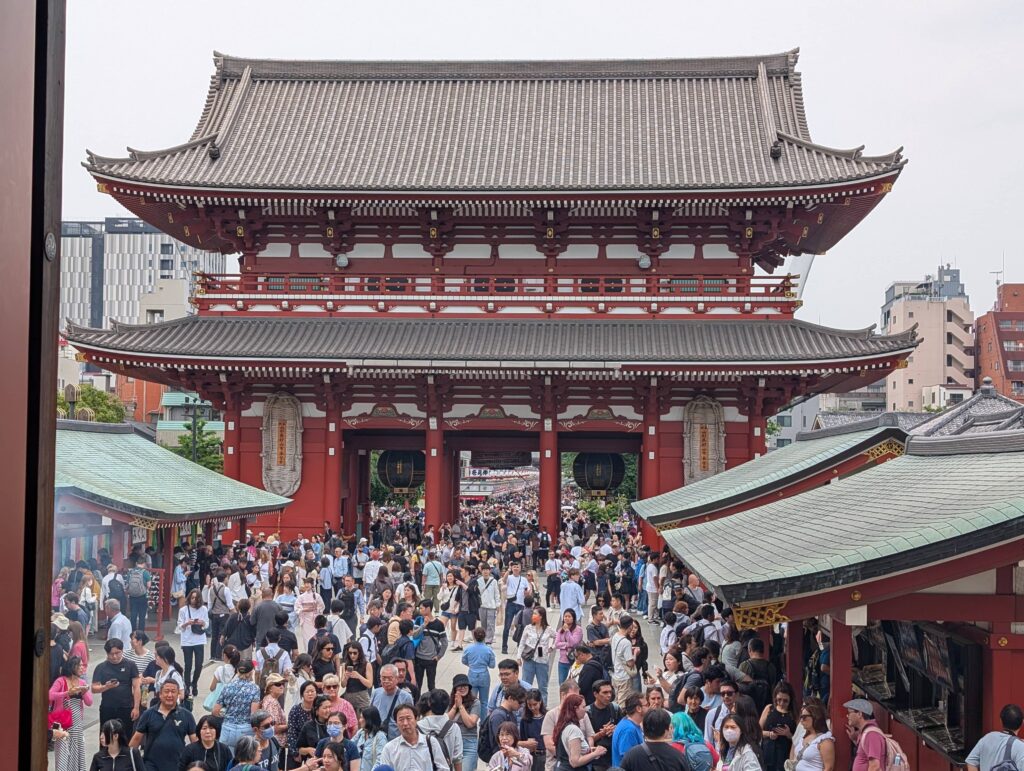
“Shrines enshrined”… who one earth do I think I am? Have I not head of a thesaurus?
We got to Tokyo from Hiroshima on out second Japanese night bus, which was slightly better than the last, but still not at all conducive to sleep, even after a sleeping pill! Be warned, Japanese night-buses just don’t do reclining chairs or beds, so plan for extra tiredness if you take one!
Accommodation was an issue too… Even booking over a week in advance, we couldn’t find anything in Tokyo under £120 a night. To get anywhere near to our budget, we had to stay in Yokohama – which actually worked out perfectly.
We originally planned two days in Tokyo, but crammed everything into one absurd, 30k-step marathon before retreating to Yokohama. In hindsight, this was ideal—the weather turned the next day, and Yokohama gave us a chance to rest and recover.
Pro-tip 1: If you want to stay anywhere near central Tokyo, book months in advance and brace yourself for a big bill.
Pro-tip 2: If you want to visit the Imperial Palace, either pre-book or know the exact ‘walk-in’ slot times. We didn’t do either, and when we turned up, the queue was closed stretched well over 100 metres.
Onsen encounter 1: If you’ve heard the stories about tattoos being banned in many Japanese onsens, they’re true. I couldn’t use the facilities at one hotel because of a large tattoo on my back! It was frustrating, because I had just mustered up the courage to give it a go, only to promptly discover I couldn’t!
Things We Did:
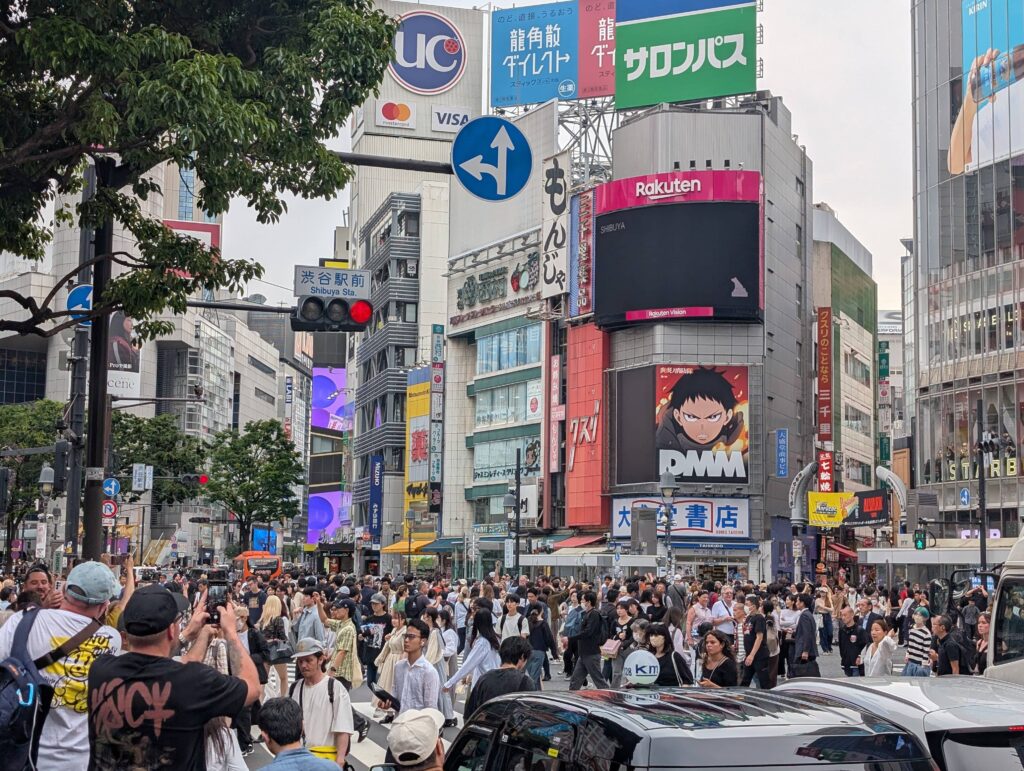
Tokyo in one day – With our brains and feet fully switched into machine-mode, we tallied up over 30k steps and many metro rides. But somehow, we managed to hit a heck of a lot of sites: the outside of the Imperial Palace (we couldn’t get in), Kichijōji Temple, Tokyo Metropolitan Government Building (free city views), lunch at the Skytree, Meiji Shrine, Shibuya Scramble (weirdly quiet-ish while we were there), Shibuya rooftop park, and finally Tokyo Tower. It was too much – I wouldn’t recommend this kind of blitz, especially if you then need to haul yourself back to Yokohama afterwards!
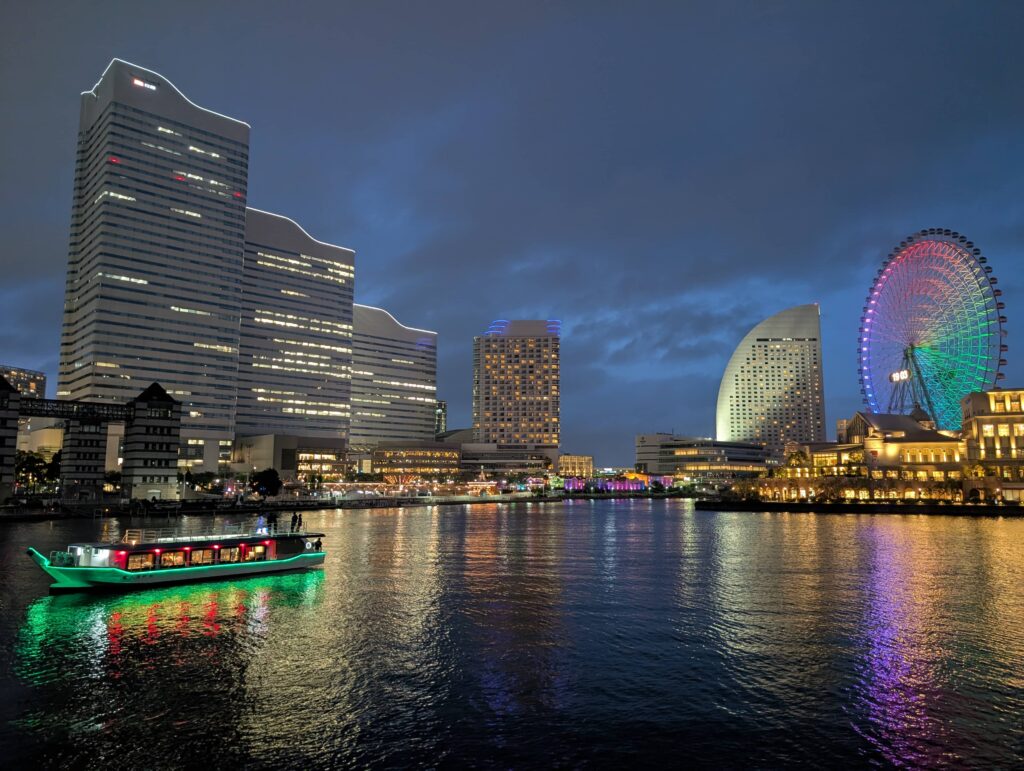
Yokohama waterfront – Perfect for recovery time. Even with my Taiwanese ear infection flaring and Tokyo still buzzing in my legs, a nighttime stroll by the illuminated waterfront was a great way to unwind. The Red Brick Warehouse makes a great food and drink stop.
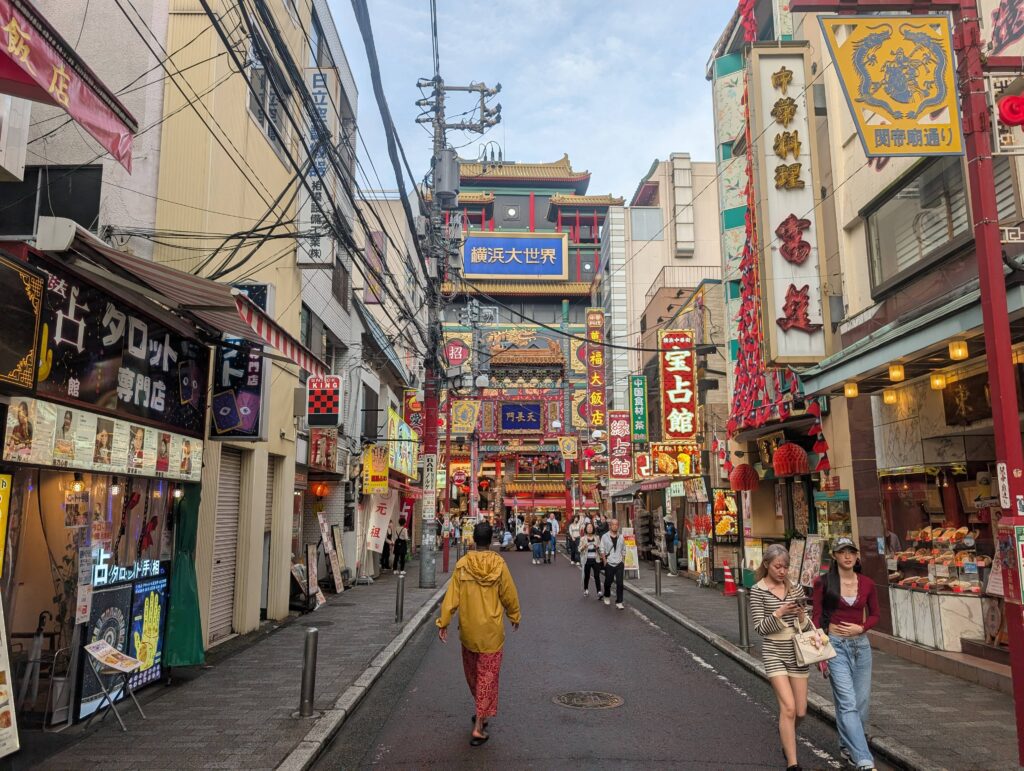
Yokohama Chinatown – Japan’s biggest Chinatown, and honestly one of the best we’ve visited anywhere. Endless food options and plenty to oddities and intrigues to explore. For us, this included a cosplay convention that was being held there! Fried-rice-ball queue was shared with anime characters, furries, and even the odd demon rabbit.
Mt. Fuji
Fuji sees the crowds,
the forests, lakes and the caves.
But do we see it?
Yikes… This one fills me with the most cringe of all… I’d like to issue a formal apology to my wife, friends, and anyone else who’s had to endure it.
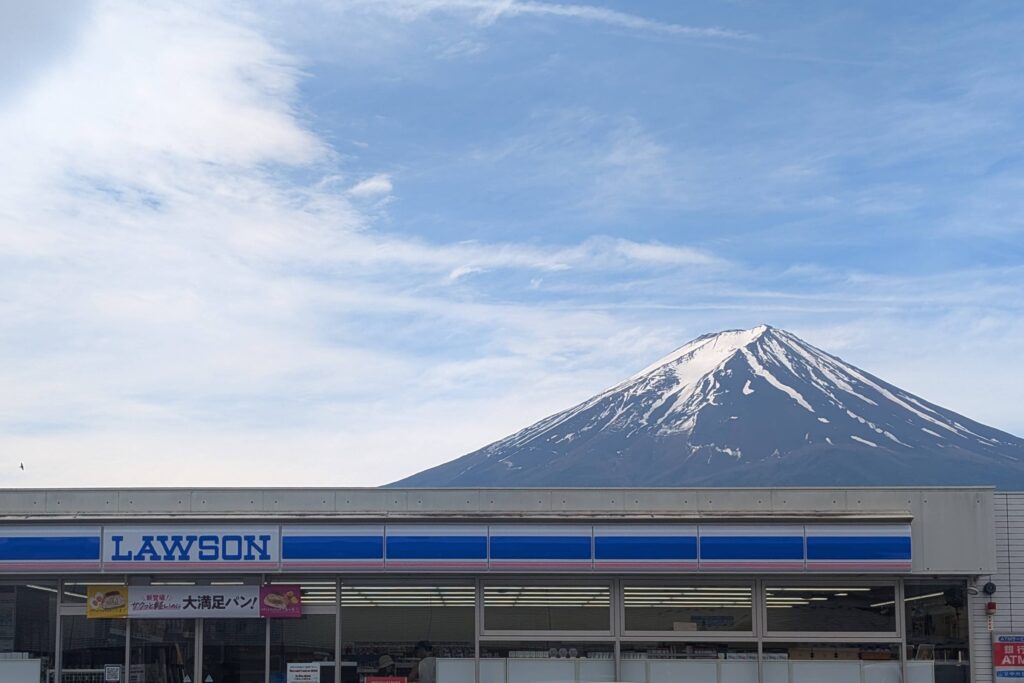
One perk of staying in Yokohama is how easy it is to get to Fujikawaguchiko. A quick and easy two-hour bus ride from the station had us standing in front of the famous Mt. Fuji Lawson convenience store by mid-morning. Fortunately for us, we arrived to perfect blue skies, which we took advantage of. However the next day was complete cloud cover. Many people don’t even get one clear day, so I’d recommend giving yourself a good few days there to improve your odds of seeing the peak.
It’s a busy place, but when we went in May it was nowhere near Kyoto or Tokyo levels of chaos. And with a bus pass, it was surprisingly easy to escape the crowds.
Onsen encounter 2: After the disappointment of my first public-bathing attempt, I felt compelled to try again… you know, just so I could say I’d done it! It’s a strange experience, not as bad as I feared, but I am really not sure how I feel about sharing the tiny little stools you really have to squat a long way down to perch on. I can’t help but feel like there’s a lot of sphincter-cross-contamination happening there…
Things We Did:
Bus Pass – These are an absolute must, the buses are brilliant. Short of renting a car or cycling for many hours, they’re the best way to reach the further-flung sights.
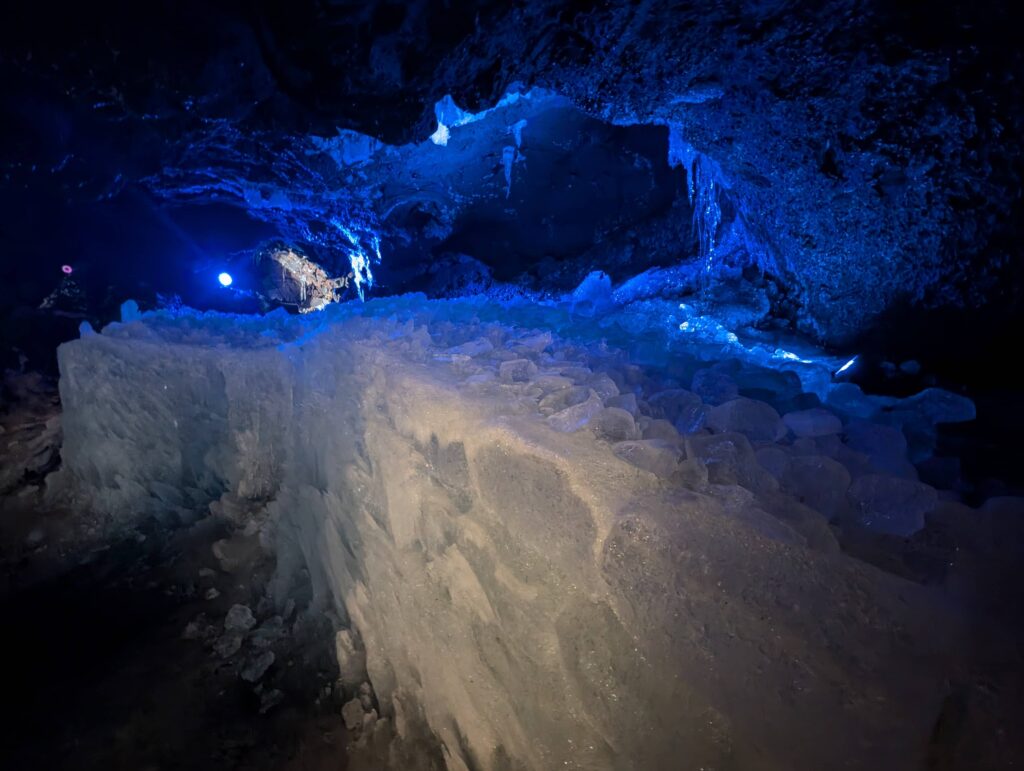
Ice & Wind Caves – Easily accessible by bus, and just a short walk apart, they’re both worth it. On a sweltering 30-degree day, you can still find huge blocks of ice still clinging to the walls inside the cave – its bizarre! If you only have time for one, make it the ice cave, and make sure to bring cash, they don’t take card or have any ATMs nearby.
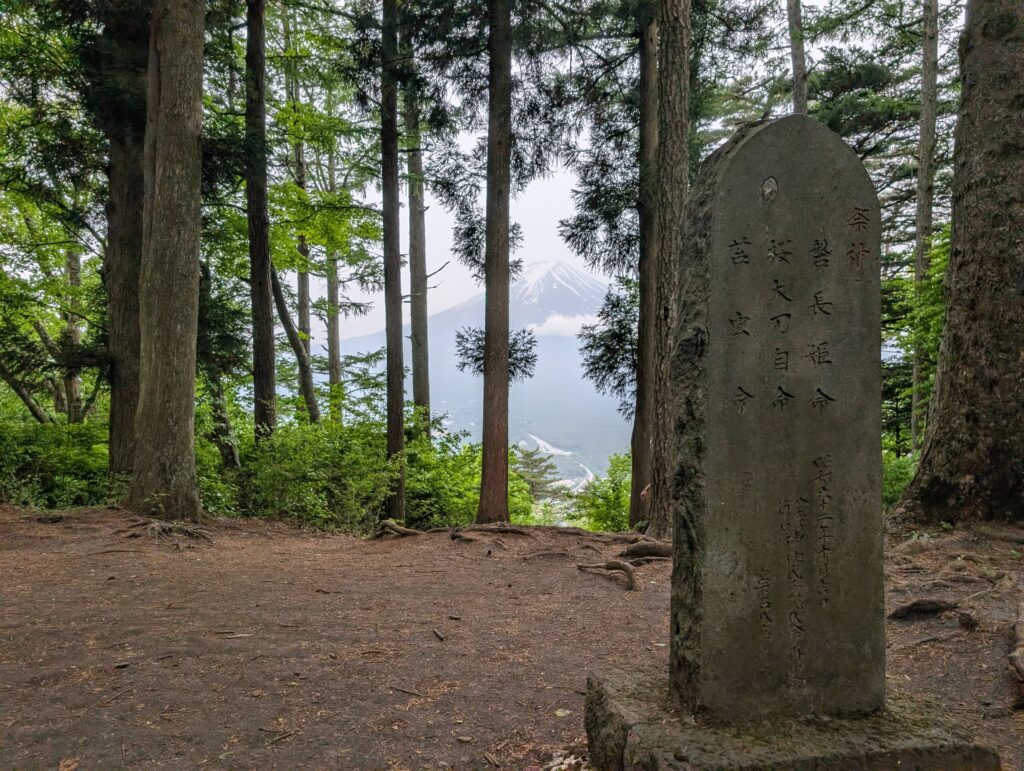
Aokigahara Forest – Infamously known as the “suicide forest,” these lovely old woods house a surprisingly nice walk. From the Wind Cave, you can take a 20-25 minute loop on the main trail, or venture further, down smaller mossy tracks if you’re feeling bold. It’s kind of spooky, but way less eerie than we’d hoped!
Rent a Bicycle – There are countless places to grab a bike. Most people circle Lake Kawaguchi, but there are plenty of other routes to explore too.
Cable Car – If you find yourself blessed with a clear day, get to the ropeway! It’s busy at the top, but the view is tremendous and worth the shoulder barging with other tourists.
Nagano
Steam and sulphur’s scent,
monkeys bicker in the stream,
villagers watch close.
This Haiku doesn’t make me cringe too much, but should clarify that when I say “sulphur’s scent,” what I’m really referring to is an unholy marriage of eggy volcanic gases and monkey faeces. The whole snow monkey park area, truly smells like a warm fart.
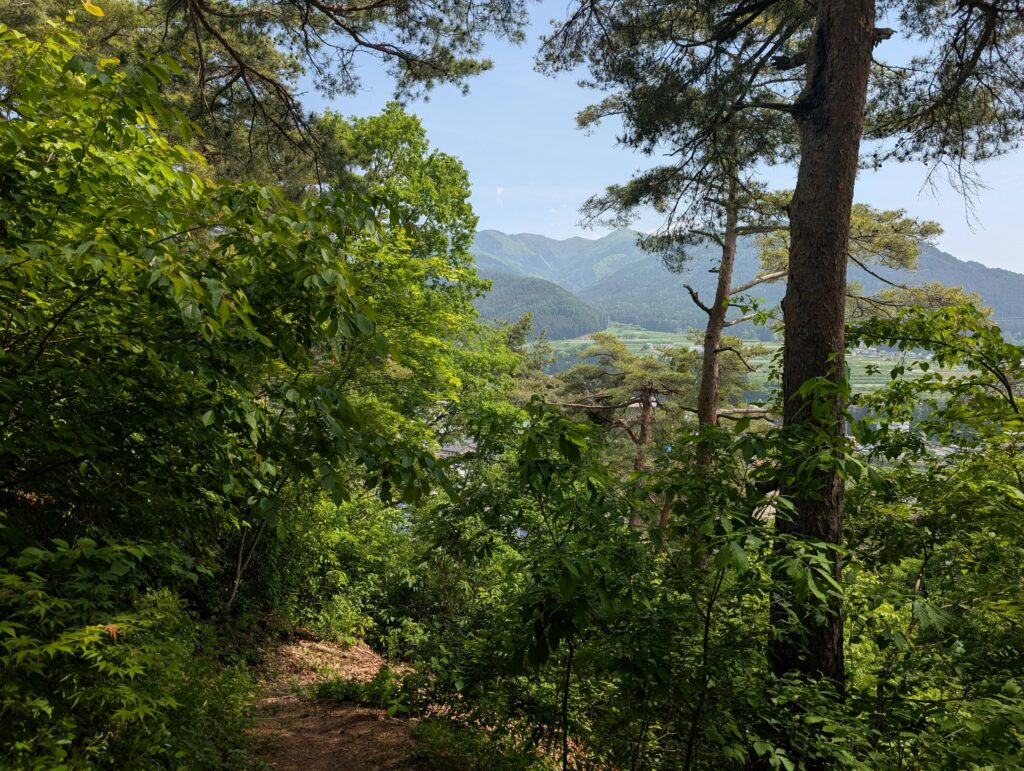
Getting from Fuji to Nagano by train wasn’t difficult, but it did make for a long day with a few changes. But on the bright side, the journey has gorgeous countryside views, with that great, rhythmic local train rattle as a soundtrack. We opted to break the journey in half, stopping at Matsumoto to see the castle – another good one, and worth the stop. Plus, we found the BEST gluten-free churros we’d ever had at ‘Tadachiya Café’.
Nagano itself is a quiet town without much to shout about outside ski season. But it makes the perfect base for the region’s calling card – snow monkeys frolicking in hot springs.
Things We Did:
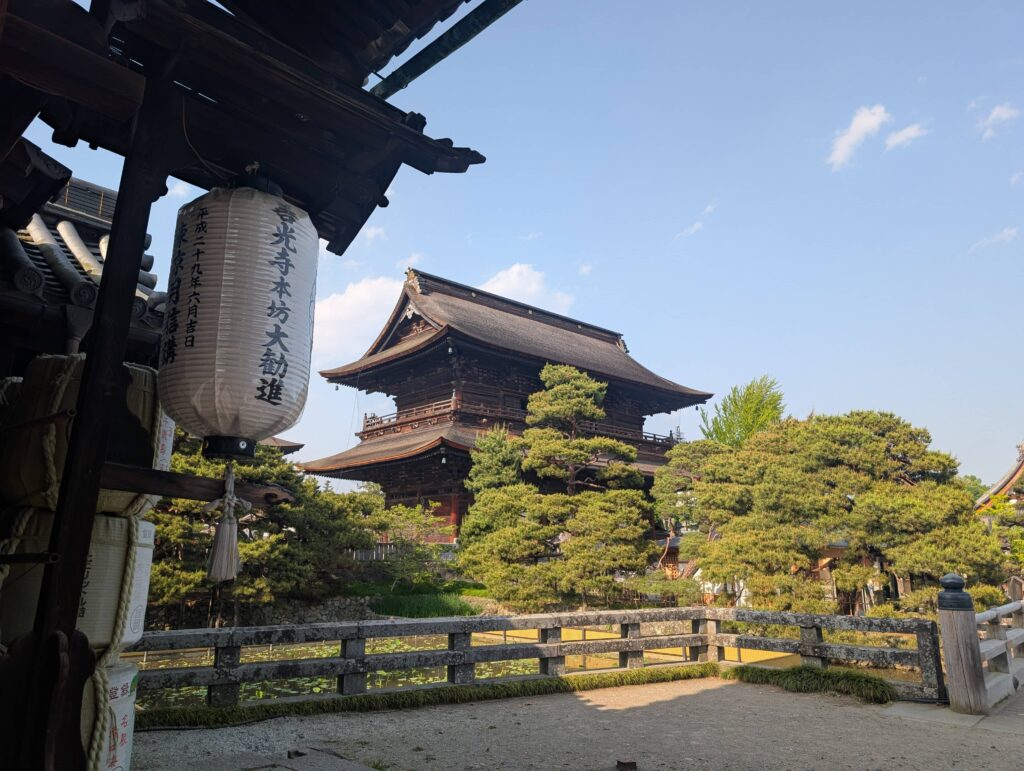
Zenkōji Temple – One of Nagano’s few big tourist sights, and a good one. Extraordinary wooden statues, zen landscaping, and that increasingly rare commodity – a genuine sense of calm.
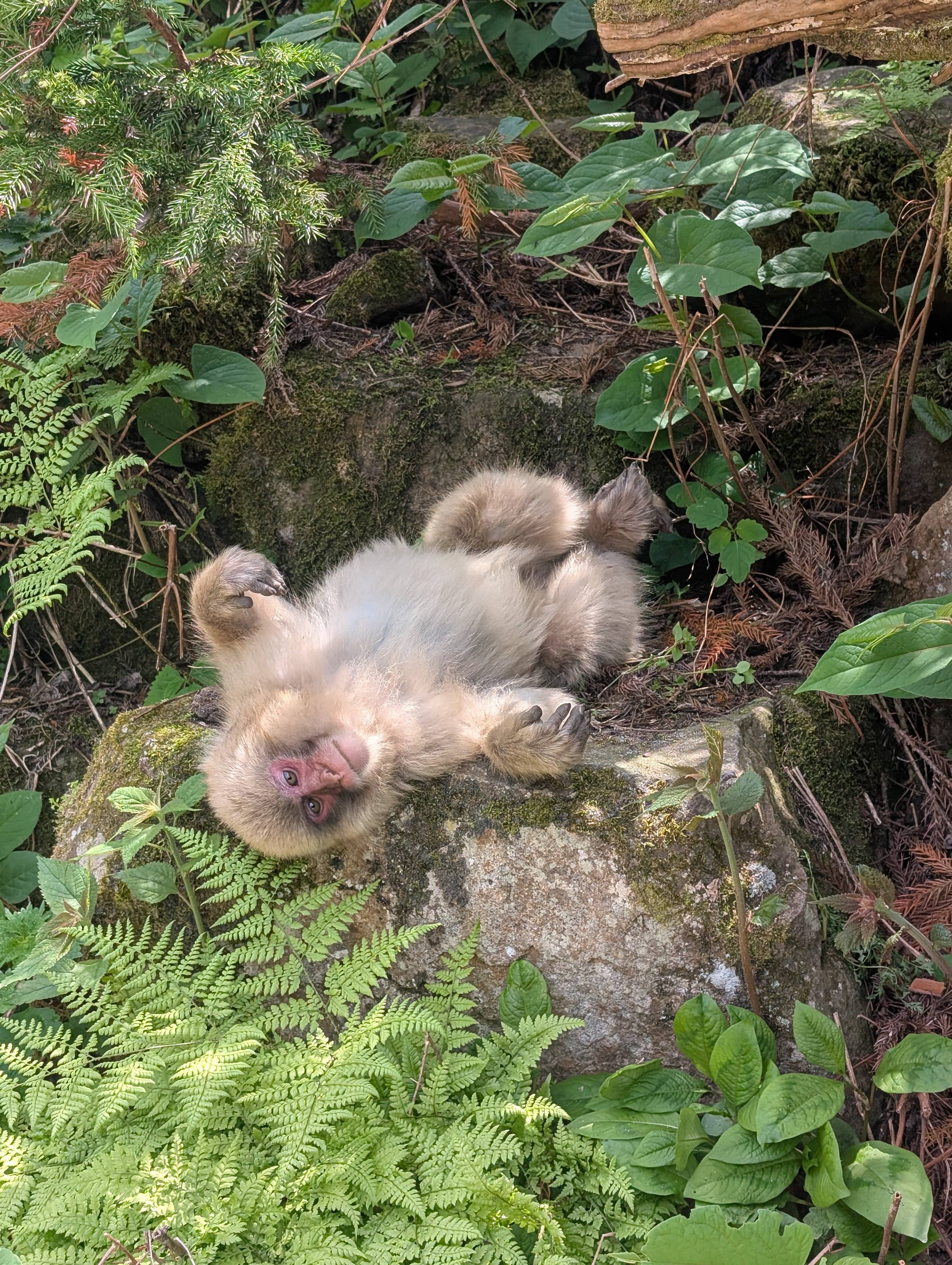
Snow Monkeys – The main reason we ventured to Nagano. It’s an easy(ish) bus ride from the station, but definitely buy the day-pass online in advance, it saves money and includes entry. Be aware that from the drop-off, it’s still a 40-minute hike to the monkey hot spring area. The walk is fairly gentle and scenic, but it’s also rather busy. Bring bug spray and water!
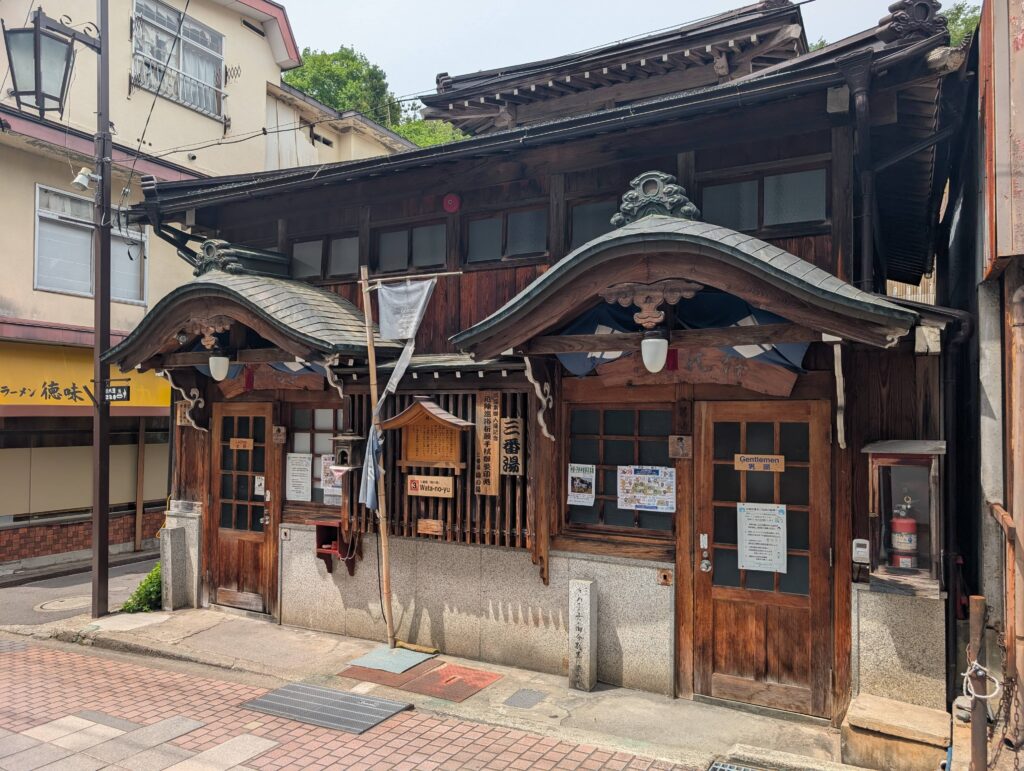
Hot Spring Villages – Once you have finished with all the snow-monkey business, instead of retracing our steps, you can follow the river towards Yudanaka station. The walk passes through sleepy villages, temples, shrines, and of course, steaming onsens. We tried out a few of the public footbaths along the way, some were unbearably hot! Out of ski season, you’ll likely have the place to yourself, which is lovely, but be ready for curious stares from the locals.
Karuizawa
Jagged black rocks rise,
water spills from hidden ground,
peace at last is found.
Snore… probably the most boring haiku in this whole blog. Fitting, really, because Karuizawa was also the dullest place we visited in Japan – in a good way! Slow-paced, super relaxing, and could be made even better if you splash out on one of the fancy onsen resorts (we didn’t, but they looked incredible).
Firstly, let me say that we’d wanted to visit at least one place a little off the usual tourist trail, and Karuizawa definitely delivered! By far the quietest stop of our time in Japan, it felt like a local holiday town in hibernation – I think people usually come for the ski slopes and hot-spring hotels in winter. Visiting in May meant blue skies, sun, and best of all, only a handful of other foreigners in sight!
Onsen encounter 3: Consider this as a public service announcement. After satisfying our onsen curiosity in Fuji, we thought we were done with communal bathing. That was until Karuizawa, where we found out that some hotels in Japan don’t have private showers or bathrooms, at all! Some only offer public onsen-style washing facilities. So, we found ourselves stripping off a few more times out of pure necessity! Definitely double-check every place you book if public bathing isn’t your thing.
Things We Did:
Local Train to Komoro – With the Karuizawa tourist pass, you can hop on local trains and buses to explore nearby. Komoro is worth the short ride, there you can see the castle ruins park, old gates, art galleries, and even a slightly sketchy looking zoo if that’s your thing (it isn’t ours).
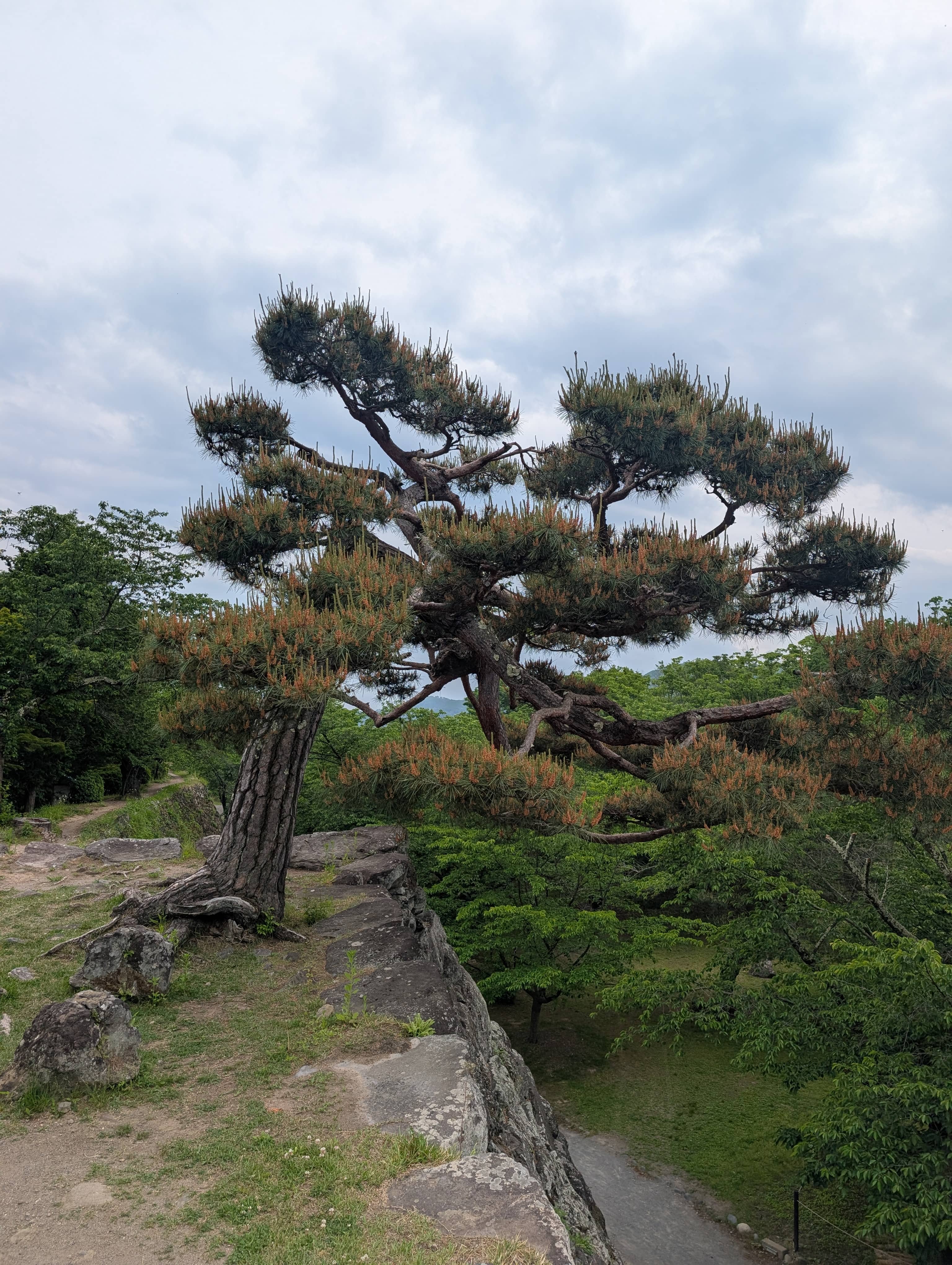
Shiraito Falls – One of the most unique and unusual waterfalls we’ve ever seen. Instead of tumbling from a height, water seeps straight out of the ground, like someone squeezing a sponge. Very weird to behold, and the only spot in Karuizawa with any amount of tourists.
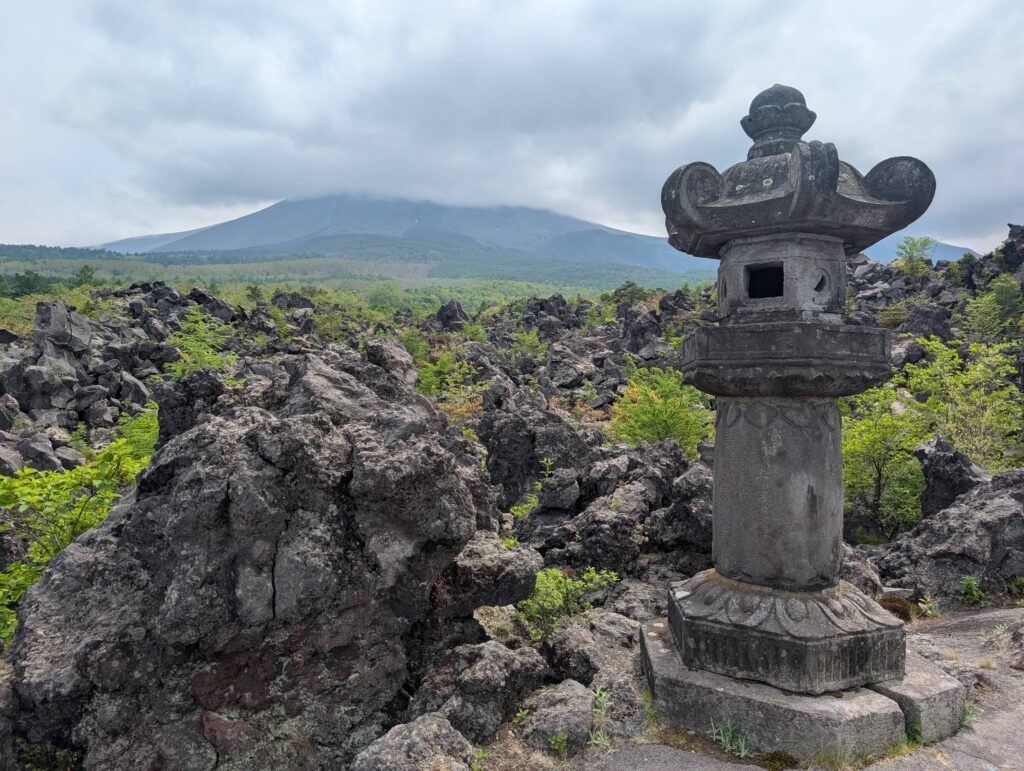
Onioshidashi Volcanic Park – The furthest we ventured on the local buses, and a real highlight. An otherworldly landscape of jagged black rock, bright flowers, and strange glowing lichen, with gorgeous views over the surrounding countryside. It’s not a very long walk, but you can easily use a few hours, especially if you add lunch at the brilliantly dated café.
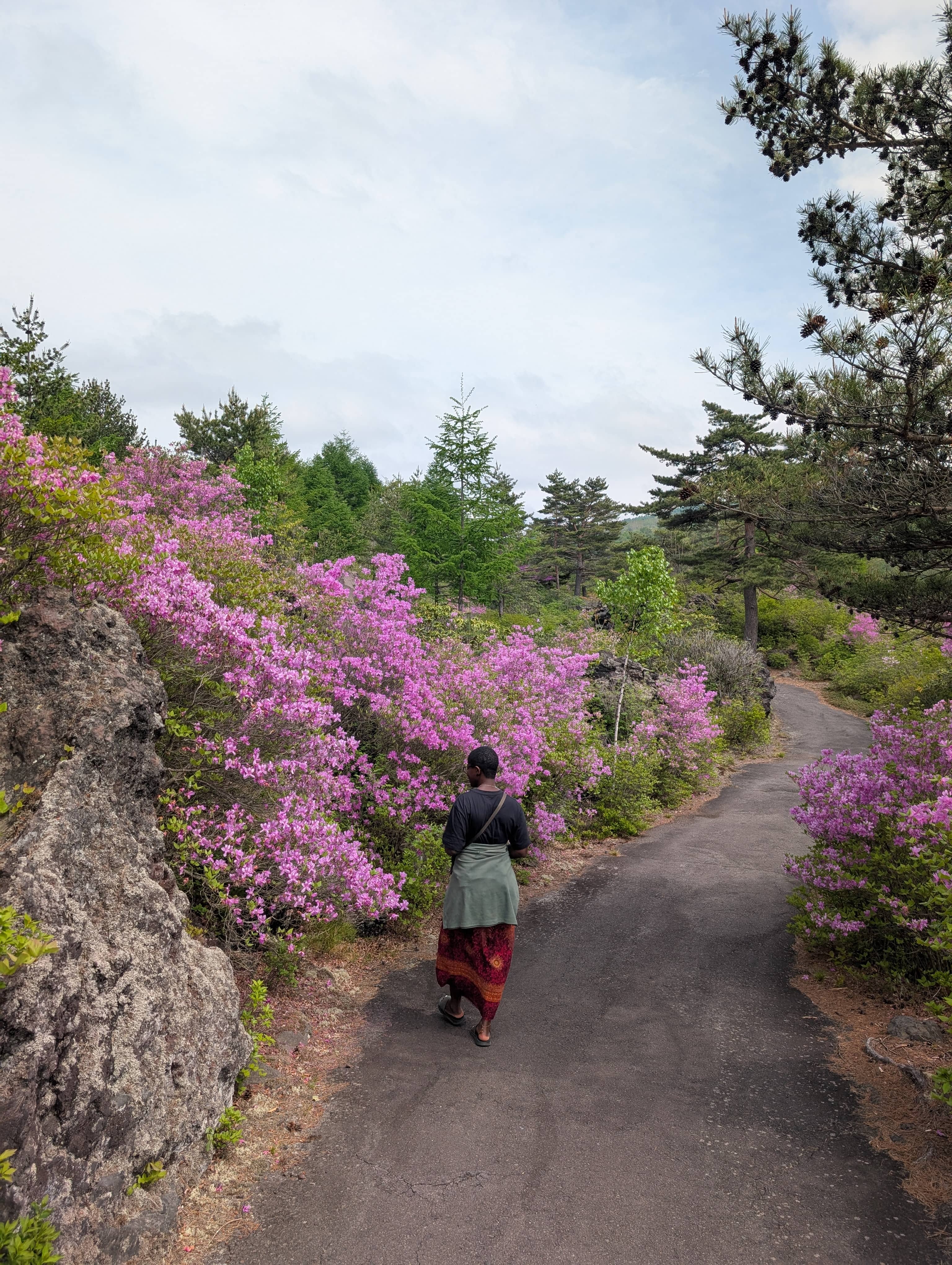
Kumoba Pond – If you find yourself with a free hour or so, take a short walk from town to the small, but beautiful pond. It’s super serene and peaceful, apart from the slightly unnerving “Warning: Bear Spotted in Area” signs dotted around while we were there.
That’s it! All the Haikus, Hot Springs, and Hentai You Could Ever Need
So that was our 2-week tour of Honshu; a blend of temples, trains, night buses, hot springs, forests, monkeys, and more convenience store meals than I’d like to admit. Some of it was utterly exhausting, while other parts were almost perfectly serene at the same time. One day you’re like a sardine in Shibuya, or getting elbowed in Kyoto, but the next day you’re alone under a mossy canopy, suddenly realising where Studio Ghibli gets all its ideas from. My haiku abilities did not do it justice, in fact I worry they might even put people off visiting Japan… actually, perhaps that wouldn’t be so bad!
So, if you’re planning your own trip, my advice is simple – plan Tokyo many weeks ahead, give Fuji a minimum of two days, use the night buses if you’re on a budget (but don’t expect much sleep). Lastly, make the effort to get off the beaten path, somewhere slower, like Nagano, or even better, Karuizawa!
I am certain we will go back to Japan, we barely scratched the surface of all the places I had highlighted in my Lonely planet book! Also, I know now that I would love to go back during winter – a steamy onsen and a warm noodle-y broth, while surrounded by snow is a new addition to my bucket list!
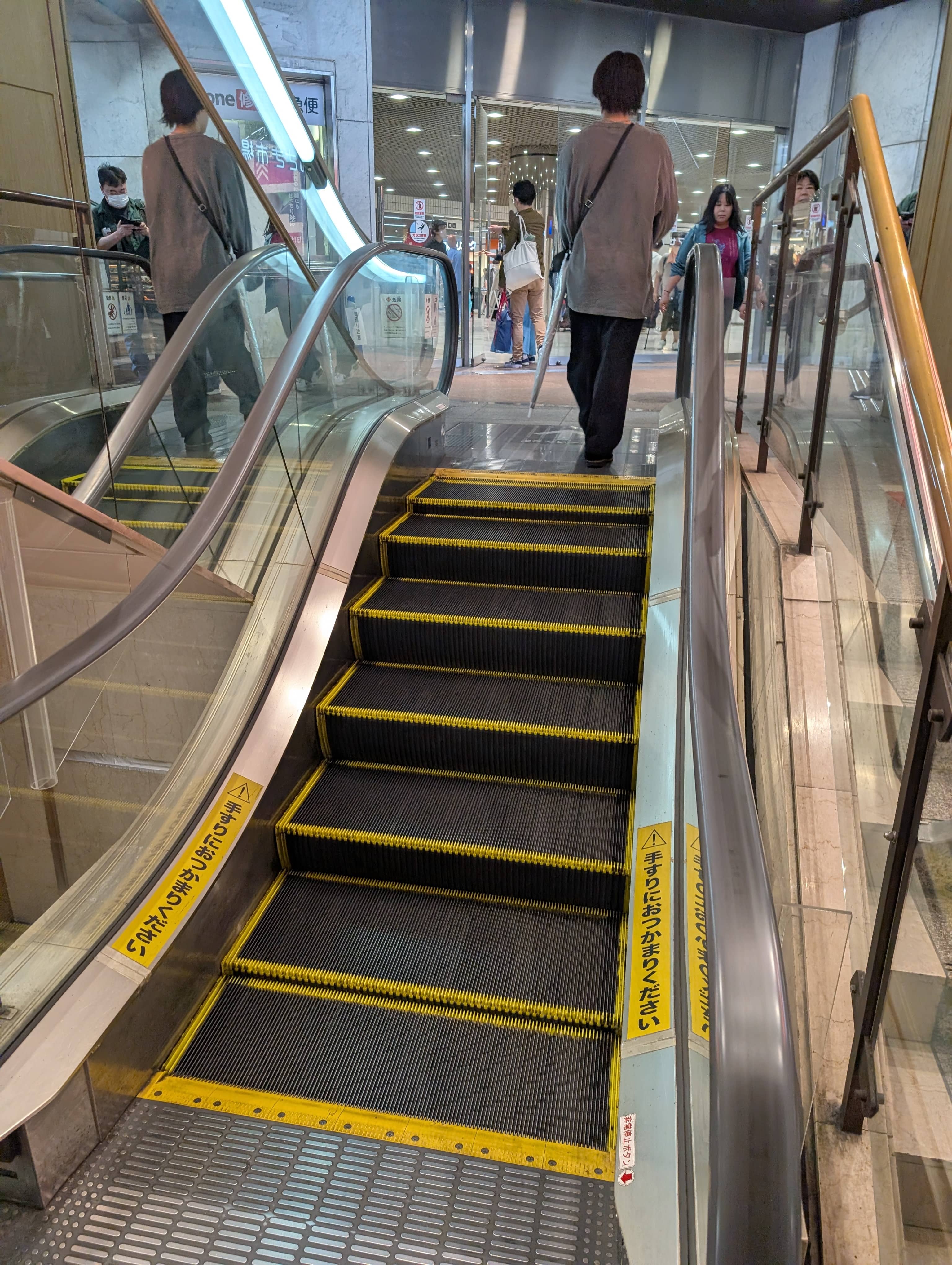
Well… it feels wrong to end without one last bit of bad poetry! Here’s the encore, whether you want it or not:
Breathtaking country,
stripped us and our wallets bare,
but the toilets rule…
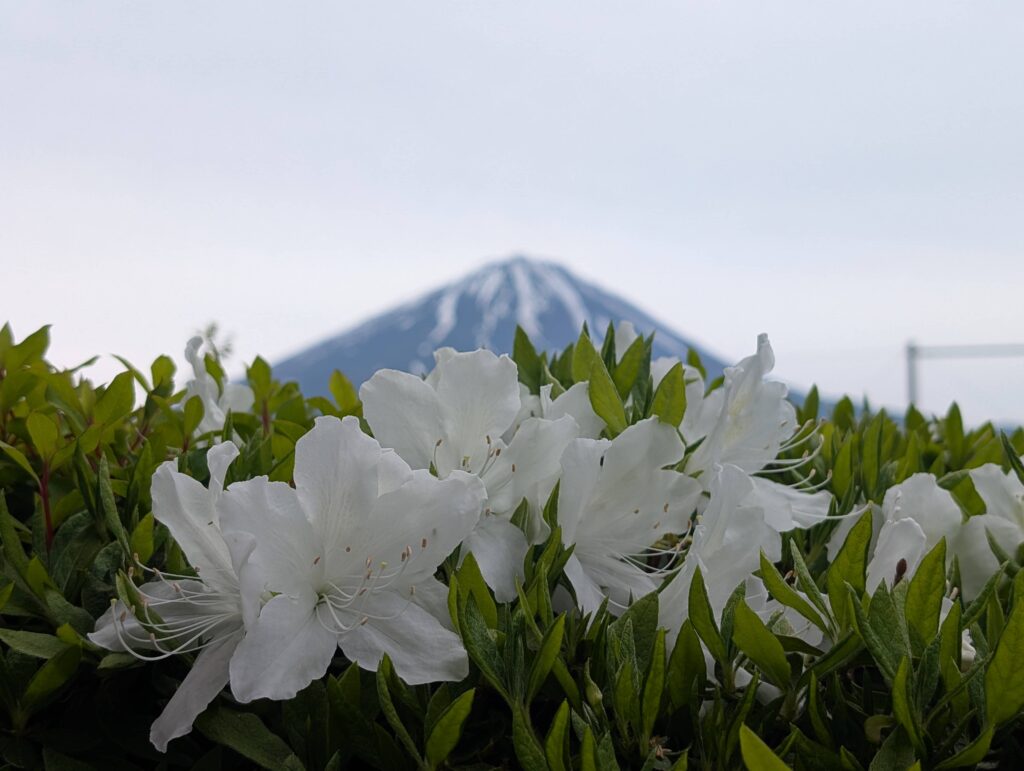
Honestly, I can’t believe I went a whole blog without mentioning the fantastical, Japanese robo-toilets! Hey ho, there’s always next time.
Stay bald folks.
Toodles,
Jack